Baby eye color calculator
Pick mom’s and dad’s eye colors to see your baby’s odds of brown, hazel, green or blue eyes. Add the grandparents if you know them: they reveal the hidden genes. Free, instant, nothing to upload.
Gray eyes count as blue, amber as brown. Nothing is uploaded; the calculation runs in your browser.
Pick both parents’ eye colors
The odds for brown, hazel, green and blue appear here at once.
The short answer
A baby’s eye color comes from both parents’ genes, including hidden ones. Brown is dominant over green and blue, and green over blue. Two brown-eyed parents usually have a brown-eyed baby (about 84%), but about 13% of the time blue; a brown-eyed and a blue-eyed parent: about 61% brown, 35% blue; two blue-eyed parents: almost always blue (98%). The color usually settles between 6 and 12 months.
Baby eye color chart
The odds for every pair of parents’ eye colors, without grandparents. Add them in the calculator above for a sharper answer.
| Parents | Brown | Hazel | Green | Blue |
|---|---|---|---|---|
| Brown + brown | 84% | 3% | <1% | 13% |
| Brown + hazel | 55% | 27% | 9% | 9% |
| Brown + green | 29% | 36% | 18% | 17% |
| Brown + blue | 61% | 4% | <1% | 35% |
| Hazel + hazel | 36% | 39% | 19% | 6% |
| Hazel + green | 12% | 39% | 38% | 11% |
| Hazel + blue | 24% | 27% | 26% | 23% |
| Green + green | 2% | <1% | 76% | 22% |
| Green + blue | 2% | <1% | 52% | 46% |
| Blue + blue | 2% | <1% | <1% | 98% |
It does not matter which parent has which color. Gray eyes count as blue and amber as brown.
How the baby eye color calculator works
Every child gets one copy of each gene from each parent. This calculator uses the classic two-gene model of eye color: one gene where brown is dominant over blue, and one where green is dominant over blue. A parent with one brown and one hidden blue copy has brown or hazel eyes but can still pass on blue; two hidden blue copies, one from each parent, make blue eyes.
That is why grandparents help. A brown-eyed mom whose father has blue eyes must carry a blue copy, so a blue-eyed baby becomes much more likely. When you do not know a grandparent, the calculator uses how common each version of the gene is in the US population.
Hazel here means one brown copy plus a green one. Real eye color involves at least 16 genes, and the same parents can have children with different eye colors, so 3% of every answer is set aside for the genes the model leaves out. Treat the result as odds for fun, not a genetic test.
When do babies’ eyes change color?
- At birth: many babies of light-skinned parents have blue or gray eyes, because the iris has little melanin yet. Babies of darker-skinned parents are usually born with brown eyes.
- 3 to 6 months: the first changes often show, from blue toward green, hazel or brown as melanin builds up.
- 6 to 12 months: the color usually settles. Eyes that are still blue at a year are likely to stay light.
- Up to about 3 years: small shifts in shade are still possible. Eyes do not go from brown back to blue.
Beyond eye color
See your baby’s whole face
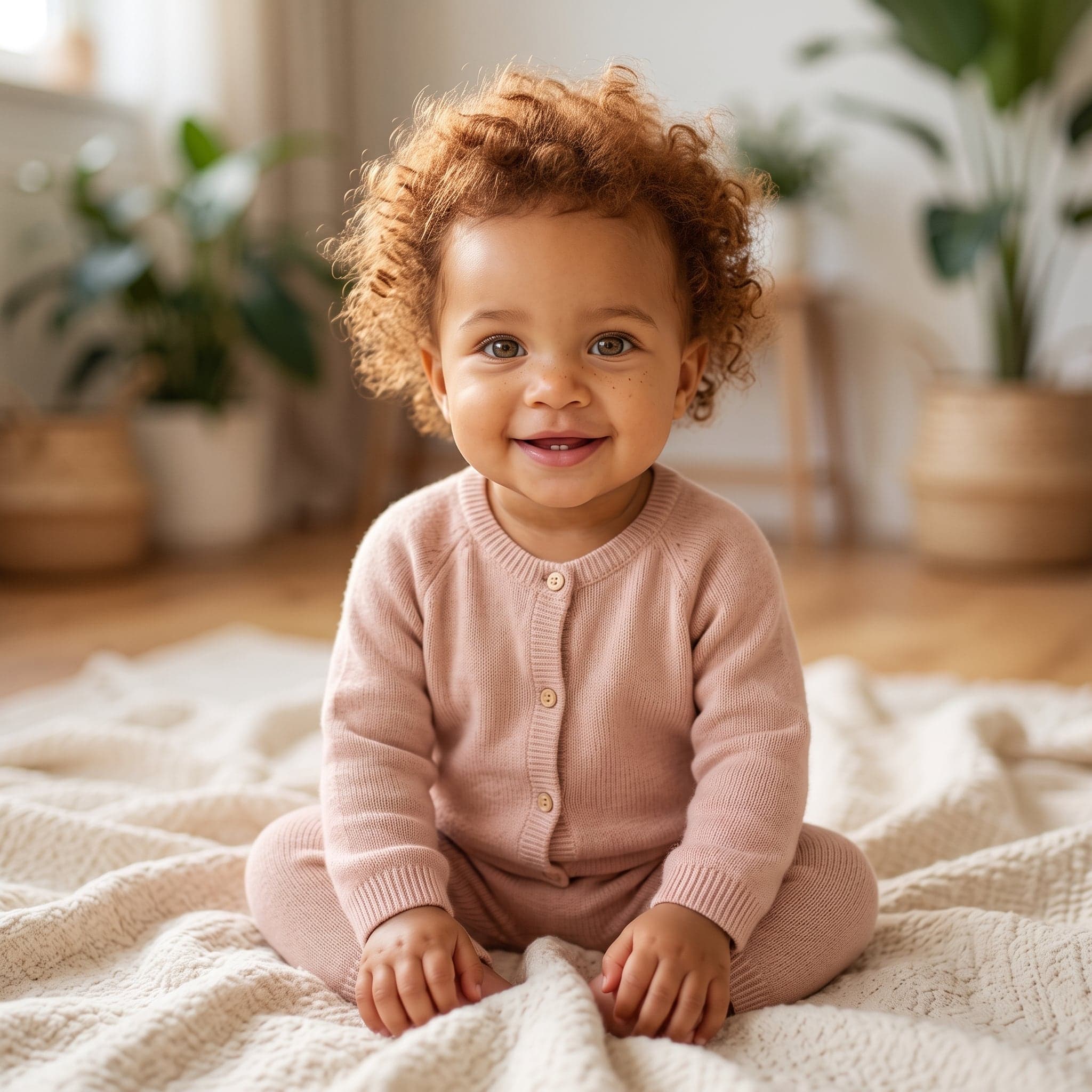
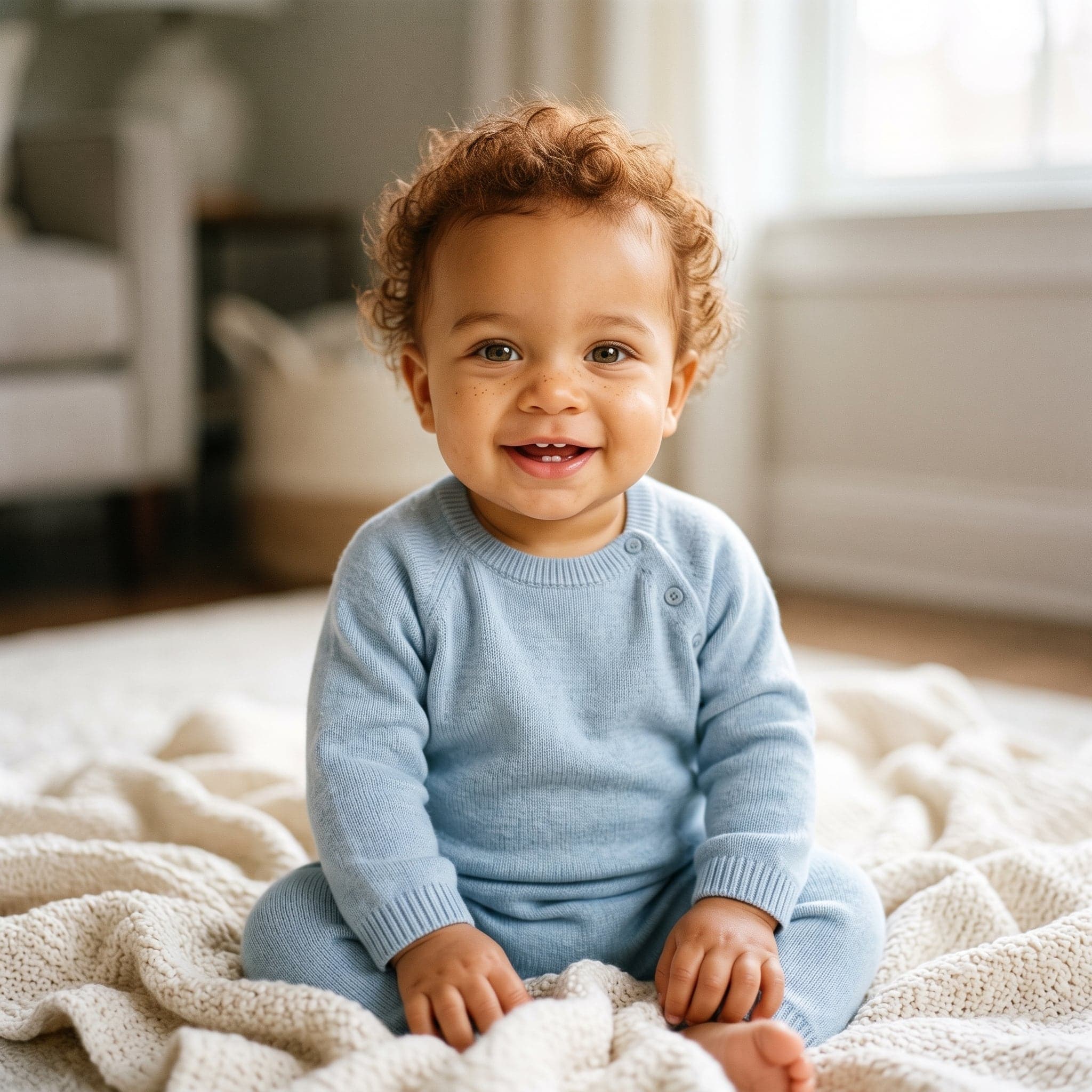
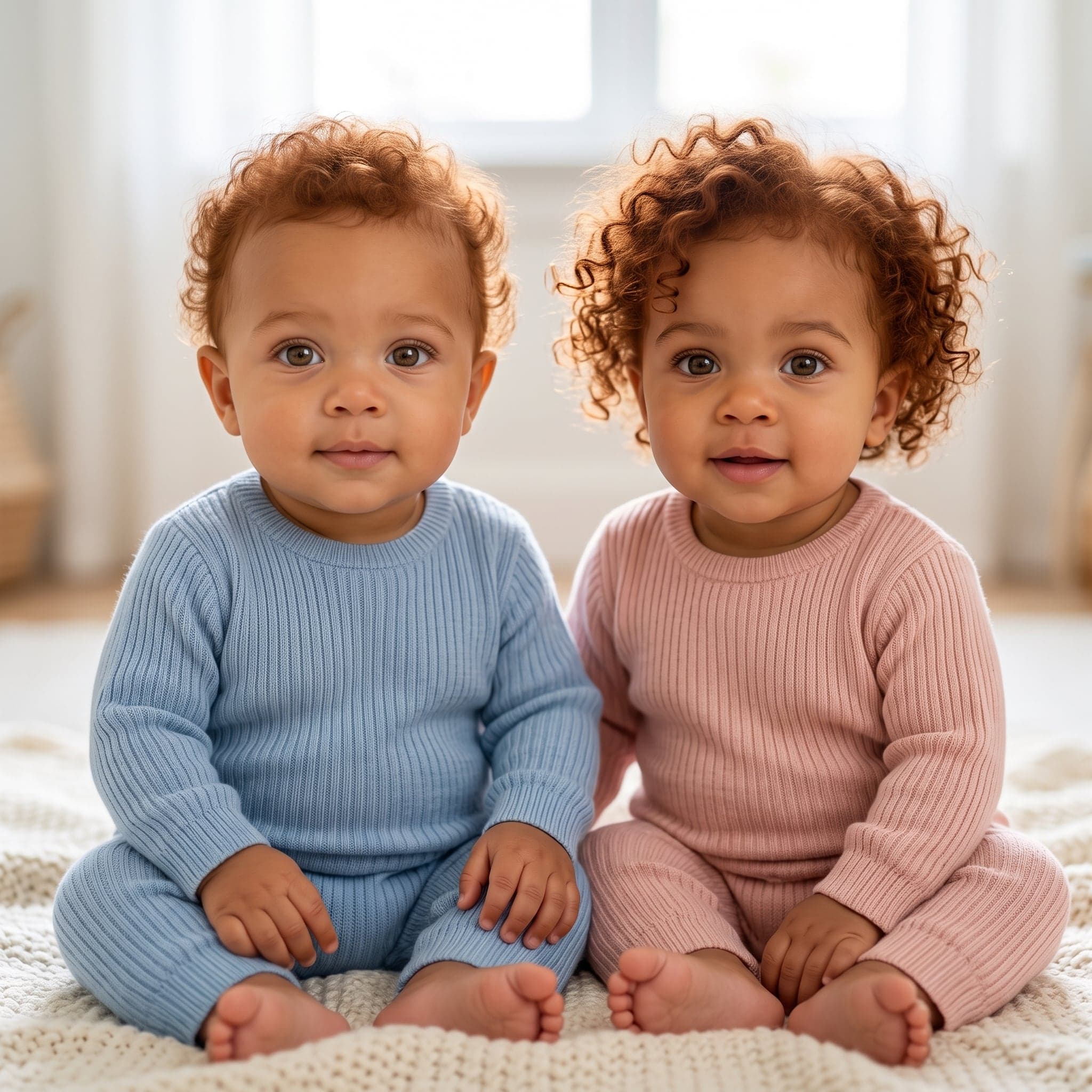
Add a photo of each parent and see what your baby could look like, eyes, hair and face, in about 30 seconds. The first preview is free with no sign-up; the full set is $9.90 once.
Try the AI baby generatorQuestions people ask
Answers to what parents search about their baby’s eye color.
How do I figure out my baby’s eye color?
Start with both parents’ eye colors, then add the grandparents’ if you know them: they show which hidden genes a parent may carry. The calculator above combines them and gives the odds for brown, hazel, green and blue. For two brown-eyed parents it is about 84% brown and 13% blue; with a blue-eyed grandparent on each side, blue rises to about 25%.
At what age is a baby’s true eye color?
A baby’s eye color usually settles somewhere between 6 and 12 months, as the iris builds up melanin. Small changes can continue until about age 3, so a 1-year-old’s eyes are a good guide but not always the final shade.
Are babies’ eyes still blue at 4 months old?
Often, yes. Many babies, especially those with light-skinned parents, are born with blue or gray eyes and still have them at 4 months; the color can darken to green, hazel or brown later in the first year. Babies with darker-skinned parents are usually born with brown eyes that stay brown.
What is the rarest eye color?
Of the common eye colors, green is the rarest, often estimated at about 2% of people worldwide. Gray and amber are also rare. Brown is by far the most common eye color in the world.
Can two brown-eyed parents have a blue-eyed baby?
Yes. If both parents carry a hidden blue gene, their baby can have blue eyes: without knowing the grandparents, the chance is about 13%. If each parent has a blue-eyed parent of their own, it rises to about 25%.
Can two blue-eyed parents have a brown-eyed baby?
Rarely. Two blue-eyed parents almost always have a blue-eyed baby (about 98% here). Because eye color involves many genes, another color is possible but uncommon; it is not, on its own, a sign of anything.
How accurate is a baby eye color calculator?
It gives odds, not a certainty. This one uses the classic two-gene model of eye color, which explains much of the brown, green and blue pattern, with population frequencies that match US eye colors. Real eye color involves at least 16 genes, so 3% of every answer is reserved for them: no result is ever shown as 0% or 100%.
Can I see what my baby will look like, not just the eye color?
Yes. Add a photo of each parent to our AI baby generator and see a free preview of your future baby in about 30 seconds, with no sign-up. The full set, a boy and a girl in two versions each, twins, your child at 5 and 15, a family portrait and a video, is $9.90 once.